How AI-Inspired Language Skills Can Supercharge Your Learning
language processing is no longer just a topic for linguists and cognitive scientists; it now sits at the heart of how AI systems learn to read, write and translate. By watching how these models handle words, patterns and context, we can reverse-engineer better strategies for human learners too. In this article, we will explore what AI reveals about memory, attention and practice—and how to turn those insights into smarter ways to study English or any other language.
From test scores to textbooks: a learner’s story
Imagine Ana, a university student who has always felt “average” at languages. At school, she did fine on vocabulary quizzes but froze in real conversations. When her psychology department offered an optional aptitude assessment, she took it out of curiosity. The report showed her overall IQ score sitting very close to the statistical average of 100 (with the test normed so that most people cluster within about 15 points of that mean), yet her verbal reasoning stood out as a relative strength.
Her first reaction was confusion: how could she be strong in verbal reasoning but still stumble in speaking English? Her lecturer explained that traditional IQ scores, while useful, only capture a snapshot of potential. Tests such as Raven's Progressive Matrices, for example, are widely used to assess abstract reasoning using visual patterns, not words. They tell us a lot about how someone sees structure and relationships, but they say little about how comfortable that person feels ordering coffee in another language.
What changed Ana’s path was an AI-powered language tutor her friend recommended. Rather than giving her the same textbook drills as everyone else, the system adapted to her behavior. It noticed she recognized complex grammatical patterns quickly but hesitated whenever she had to respond under time pressure. The AI slowed down at crucial moments, repeated certain conversational frames and offered visual cues to support her attention when it started to drift.
After a few months, Ana’s classmates were surprised: she volunteered in discussions, handled idioms more gracefully and even started watching shows without subtitles. Her raw intelligence had not suddenly increased; instead, the way she practiced began to mirror the strengths and weaknesses that cognitive assessments had quietly revealed all along.
What AI models reveal about how minds handle words
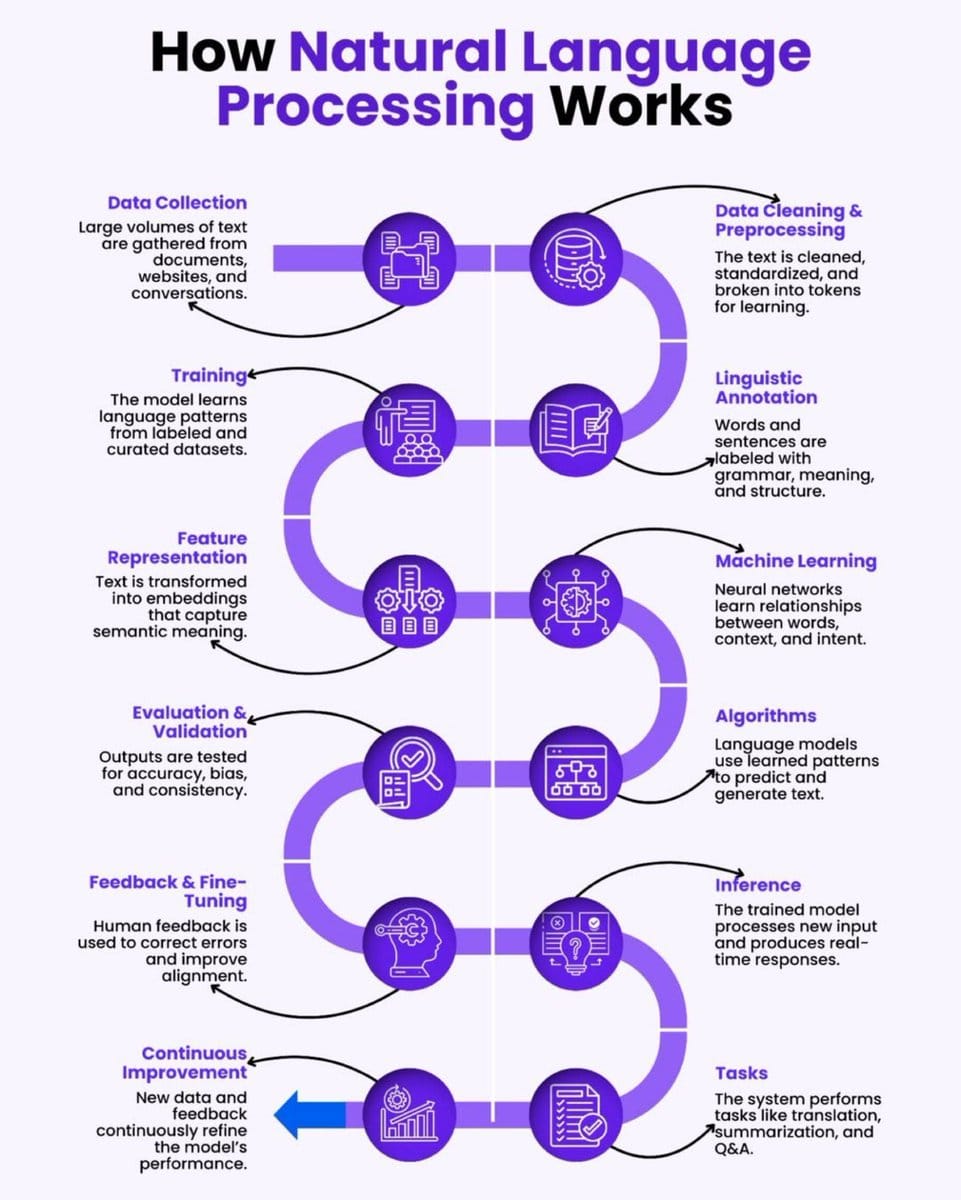
Modern AI systems that deal with language are trained on a staggering number of examples. They do not “understand” in the human sense, but they learn powerful routines for predicting what comes next in a sentence, refining those predictions through feedback. When we look closely at how these systems are built, we can spot principles that are equally relevant for human learners.
Patterns matter more than isolated facts
In both IQ testing and language learning, patterns are everything. Raven's Progressive Matrices present test-takers with visual grids where they must infer the missing piece. Success depends on spotting rules—rotations, progressions, symmetries—rather than memorizing pictures. A similar process happens when someone decodes tense endings in English or learns where adjectives belong in French sentences.
AI language models thrive on pattern density: the more examples they see of a construction in different contexts, the better they become at using it flexibly. For human learners, this suggests we should move beyond single-word flashcards and instead practice in rich phrases, sentence frames and short dialogues. Seeing the same structure in new contexts trains the brain’s pattern-recognition machinery, much like repeated exposure to matrix-style problems improves abstract reasoning.
The quiet power of practice effects
Psychometricians have long documented “practice effects”: when people repeat a test or grow familiar with its format, their scores can rise even if their underlying ability has not dramatically changed. Someone who sits an IQ test twice within a short period might gain a few points simply because they better understand how the questions are structured and how much time they have.
For language learners, this is not a loophole—it is a feature you can deliberately harness. Every time you use the same listening platform, attempt a similar grammar exercise or speak through a familiar dialogue scenario, your brain uses less energy figuring out the instructions and more energy processing content. The structure becomes automatic, freeing resources for nuance, pronunciation and creativity.
AI tutors lean heavily on this principle. They keep key formats stable—such as a quick warm-up quiz followed by a focused drill and then a short free-production task—while varying the language within those frames. You can borrow this idea even without technology by designing your own “templates” for study sessions that become as predictable as test instructions.
Language, attention and working memory
Another lesson from AI architectures is the importance of attention. In models, attention mechanisms decide which words in a sequence are most relevant to predicting the next one. In people, attention decides which words actually make it into working memory long enough to be understood and stored.
For learners with ADHD or simply busy, distracted lives, this bottleneck is crucial. If only half of a sentence truly reaches conscious processing, progress feels slow no matter how intelligent you are. Both AI research and cognitive psychology suggest that reducing noise—shorter input bursts, clear visuals, meaningful context—can dramatically improve how much information sticks.
Turning AI principles into everyday study routines
Knowing what makes AI and human cognition effective is only useful if it changes what you do between now and your next study block. Below are practical ways to integrate these insights into concrete language-learning habits, whether you are preparing for an English exam, exploring a new language for travel or training verbal skills to complement aptitude tests.
1. Build study “episodes” instead of marathon sessions
AI models learn in batches: many short passes over data rather than one overwhelming exposure. You can mimic this by planning three or four focused 15–20 minute episodes instead of a single exhausting hour.
- Episode 1: quick review of yesterday’s vocabulary using phrases rather than single words.
- Episode 2: a listening or reading passage that uses those phrases in context.
- Episode 3: brief speaking or writing task recycling the same patterns.
Each episode keeps the structure familiar, echoing the way practice effects boost test performance, but the content turns over quickly enough to remain engaging.
2. Train pattern recognition alongside vocabulary
Because abstract reasoning skills and linguistic skills share a love of structure, consider dedicating part of your routine to pattern-focused tasks. That might mean short grammar discovery activities (highlighting how a tense behaves across multiple sentences) or even non-verbal puzzles that warm up your brain to notice regularities.
If you are curious how strong your pattern recognition is before you start a new language, try a brief matrices-style puzzle or verbal aptitude quiz. Start the test now, observe where you hesitate most—sequences, analogies, visual patterns—and then deliberately practice language activities that echo those weak spots, such as tense sequences or comparative structures.
3. Use AI tools as mirrors, not oracles
AI chatbots, grammar checkers and pronunciation analyzers are most powerful when you treat their feedback as data about your habits. For example:
- If the grammar checker repeatedly flags the same error (such as article use), design a micro-drill where you generate ten new sentences focused only on that feature.
- If the chatbot often asks you to clarify, notice whether it is because of vocabulary gaps, vague pronouns or disorganized sentences. Target that specific weakness in your next session.
Over time, you build a personal profile not unlike an aptitude report—highlighting strengths (maybe rich vocabulary) and blind spots (perhaps complex syntax under time pressure).
4. Design routines that respect wandering attention
Many learners with ADHD traits or simply low study tolerance assume they “lack discipline” when they cannot sustain an hour of dense reading. AI design offers a kinder explanation: systems work best when they have tight feedback loops and clear signals about what matters. Your brain is no different.
Try structuring practice into micro-cycles of focus and release: three minutes of intense reading, one minute summarizing aloud; five minutes of listening, two minutes pausing to jot key phrases. Use color-coding, timers and checklists to externalize structure so your internal attention system has less to juggle.
Blending personality, aptitude and motivation
AI cannot tell you who you are, but it can reflect recurring patterns in behavior—much like personality questionnaires or MBTI-style inventories reflect typical preferences. Some learners enjoy wide, intuitive exploration of content; others thrive on tightly defined goals and explicit rules. Recognizing your style helps you choose AI tools and learning methods that fit.
If you score highly on intuitive or creative personality dimensions, you might benefit from open-ended prompts: rewriting a story from another character’s perspective, improvising dialogues or using AI to spin variations on jokes and metaphors. If you lean toward analytical, structured thinking, you may prefer systematic drills, clear progress dashboards and detailed error reports that feel closer to traditional aptitude testing.
Whichever profile you relate to, the goal is the same: create an environment in which your cognitive strengths are constantly engaged, so frustration does not drown out motivation. That alignment is often more important for long-term language success than a single IQ score or test result.
Bringing AI-style thinking into your next study session
When researchers evaluate how well people handle complex patterns—whether in abstract reasoning or in language processing—they often rely on standardized measures. But your day-to-day learning progress depends less on labels and more on how you practice. By borrowing core ideas from AI systems—short, repeated training episodes; stable formats with varied content; tight feedback loops; and respect for attention limits—you can design a routine that works with your brain instead of against it.
Think of each study session as a small “training run” for your future self. Track what feels easy and what drains you. Adjust your formats the way an engineer tweaks a model: not with judgment, but with curiosity. Over weeks and months, these tiny experiments accumulate, turning scattered practice into a coherent, data-informed journey toward fluent, confident communication.
If you treat your own language processing as something you can train step by step, AI stops being a distant, mysterious technology and becomes a useful mirror for your growth—illuminating not just how you learn words, but how you think, create and connect with others.
Questions learners often ask
Does a higher IQ automatically mean faster language learning?
Not necessarily. While certain IQ subtests (such as verbal reasoning or working memory) can support aspects of language learning, they do not guarantee motivation, resilience or good study strategies. Many people with average IQ scores become highly proficient through consistent, well-designed practice, while some high-IQ individuals struggle because they rely on last-minute cramming. Focus on building habits that align with your cognitive profile rather than chasing a single number.
Can AI tools replace traditional language teachers?
AI tools are powerful supplements, not full replacements. They excel at providing instant feedback, endless examples and adaptive drills tailored to your performance data. Human teachers, however, bring expertise in nuance, cultural context, emotional support and classroom dynamics. The most effective approach blends both: use AI for personalized, high-frequency practice and teachers or tutors for strategic guidance, conversation and deeper understanding.
How can I use AI if I have trouble focusing for long periods?
If sustained focus is difficult for you, look for AI apps that support short, gamified interactions and clear goals. Set tight time limits (for example, two 10-minute sessions a day), enable reminders and choose modes that keep you actively responding rather than passively watching. Combine these digital tools with simple analog strategies—like writing key phrases on sticky notes or recording quick voice memos—to offload memory demands and make each brief burst of attention count.

Related resources
language processing: improve your results by practicing and tracking progress.