
IQ, the classic measure of cognitive ability, has sparked endless debates, especially nowadays as artificial intelligence challenges our understanding of smarts. While AI excels in speed and data crunching, human intelligence shines in creativity, empathy, and adaptability. This exploration dives into how IQ stacks up against AI prowess and uncovers actionable paths for personal growth, helping you harness your unique cognitive strengths amid rapidly evolving tech landscapes.
Unraveling the Core of IQ
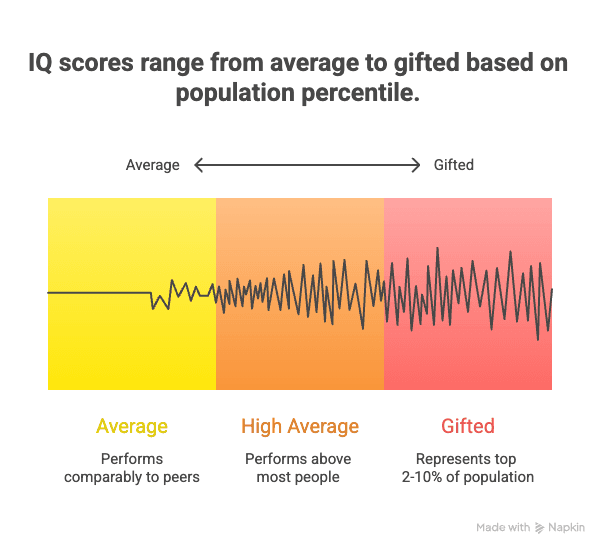
The concept of IQ revolves around standardized tests designed to gauge reasoning, problem-solving, and pattern recognition skills. Often normed to an average score of 100 with a standard deviation of 15, these assessments provide a snapshot of cognitive performance relative to peers. Tools like Raven’s Progressive Matrices stand out for evaluating abstract reasoning without language barriers, making them versatile across cultures.
Practice effects are real—familiarity with test formats can nudge scores upward slightly through better strategy recognition. Yet, IQ isn’t destiny; it’s one thread in the rich tapestry of human potential, particularly when viewed alongside tools for ADHD assessment, MBTI personality typing, and creativity evaluations.
AI’s Computational Leap Versus Human Nuance
In modern times, AI models process vast datasets at lightning speed, often outperforming humans on narrow IQ-like tasks such as pattern detection or logical puzzles. Recent benchmarks in February 2026 highlight AI surpassing average human levels in specific domains, yet they falter in holistic understanding or novel contexts requiring intuition.
Consider chess grandmasters: once the pinnacle of strategic IQ, now routinely bested by AI. However, humans reclaim the edge in improvisational scenarios, like adapting strategies mid-game with incomplete information. This contrast underscores AI’s strength in optimization but weakness in the fluid, context-rich intelligence that defines us.
Trends Reshaping Intelligence Assessment
Current trends analysis reveals a shift toward multifaceted evaluations. Online platforms now blend IQ proxies with CEFR English proficiency levels, professional aptitude tests, and even neurodiversity screenings for ADHD. In recent months, adaptive testing algorithms—powered by AI—personalize challenges, offering more accurate insights than static exams.
MBTI integration adds personality layers, showing how introversion might influence test performance under pressure. Creativity evaluations, measuring divergent thinking, complement traditional IQ by spotlighting innovation—an area where AI still lags, generating novel ideas but rarely with true originality.
Real-World Examples of IQ in Everyday Triumphs
Take entrepreneurs who score modestly on IQ tests yet build empires through grit and social acumen. One notable case involves a tech innovator with self-reported ADHD traits, using aptitude tests to pivot from rigid coding to visionary product design, blending cognitive self-knowledge with AI tools for prototyping.
In education, students leveraging Raven’s-style training apps have reported enhanced focus, turning potential deficits into strengths. These stories illustrate IQ as a starting point, not a ceiling, especially when paired with personal development strategies amid AI’s rise.
Actionable Insights for Cognitive Mastery
To elevate your cognitive game, start with baseline assessments: try validated IQ proxies alongside MBTI quizzes and creativity challenges. Track progress with spaced repetition apps, which mimic practice effects safely.
Adopt lifestyle hacks—aerobic exercise boosts neuroplasticity, while mindfulness sharpens focus, vital for those exploring ADHD pathways. Experiment with dual-n-back tasks for working memory, a core IQ component. Integrate AI as a coach: use it for personalized drills, freeing your mind for higher-order synthesis.
For professional growth, align strengths via aptitude tests; a high abstract reasoning score might suit data science, enhanced by AI collaboration. Regularly reflect: journal how personality traits interact with cognitive scores, fostering self-knowledge that outpaces any algorithm.
Frequently Asked Questions
What is the average IQ score?
The average IQ is normed at 100, with a standard deviation of 15, meaning most people fall between 85 and 115. This standardization ensures comparability across populations.
Can AI achieve human-level IQ?
AI excels in specific IQ tasks but lacks generalized human intelligence, including emotional depth and creativity. Current systems mimic high scores narrowly, not holistically.
How can I improve my cognitive abilities beyond IQ?
Focus on sleep, exercise, novel learning, and mindfulness. Combine with personality and aptitude assessments for targeted personal development.
Related resources
IQ: improve your results by practicing and tracking progress.