neuroimaging is transforming how we understand intelligence, attention, and creativity—not just in labs, but in everyday life. For people curious about their IQ, ADHD-like focus patterns, or personality profiles such as MBTI, brain research offers a powerful mirror. Used wisely, it can help you notice your strengths, design smarter study plans, and approach tests with calmer, clearer strategies rather than guesswork.
From lab images to personal insight
Imagine Maya, a university student preparing for graduate school entrance exams. She has always tested well on verbal tasks but freezes on complex diagrams and logic puzzles. Her friends joke that she is "so ADHD" because she can hyperfocus on creative writing yet loses track of instructions halfway through a math problem.
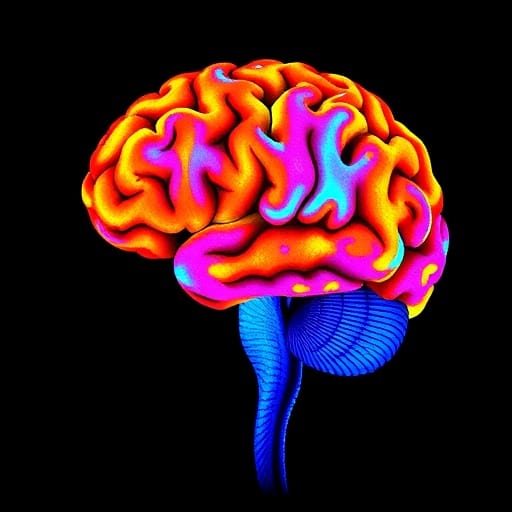
Scrolling through an article on brain scans, Maya sees color-coded images of networks lighting up during problem-solving, mind-wandering, and creative tasks. For the first time, she realizes that her struggles are not about being lazy or "bad at math"—they are about how her brain tends to allocate attention and mental energy.
She starts experimenting: breaking practice tests into shorter sprints, doing visual puzzles when her mind is freshest, and saving reading-heavy tasks for later in the day. Over several weeks, her scores inch upward, and more importantly, she feels less anxious. The images in that article did not diagnose her or magically raise her IQ, but they gave her a framework to treat her mind as a system she can work with instead of against.
This is the real promise of brain research for everyday people interested in IQ, ADHD, aptitude, English learning, or creativity: practical self-knowledge. You may never lie in a scanner, but you can use the principles emerging from labs to refine how you study, test, and create.
What brain research says about IQ, attention, and creativity
Modern neuroimaging studies consistently highlight three large-scale brain systems that underlie many skills measured by IQ tests, attention ratings, and creativity tasks: a problem-solving network, a mind-wandering network, and control systems that help you switch between them.
Intelligence tests and the brain's problem-solving network
When psychologists talk about intelligence, they often distinguish between crystallized knowledge (facts, vocabulary, learned skills) and fluid reasoning (your ability to solve new problems). Many classical IQ tests and modern aptitude exams try to capture both, while abstract reasoning tasks emphasise fluid abilities.
One widely used measure of abstract reasoning is Raven's Progressive Matrices. You see patterns of shapes in a grid, with one piece missing, and you must infer the rule that governs the pattern. Studies show that tasks like these recruit a set of frontal and parietal regions sometimes called the brain's problem-solving or frontoparietal network.
In large samples, performance on such tasks tends to follow a normal distribution: many people cluster near the middle, with fewer at the very low or very high end. This is why, in many standardized IQ tests, scores are normed so that the average in the population is set at 100, with a standard deviation of 15. That does not mean your intelligence is a single fixed number; it means your performance is being compared to a statistical snapshot of a population using particular tasks at a particular moment in time.
Importantly, research on cognitive testing repeatedly shows that practice effects exist. If you become familiar with the format of reasoning problems, your scores can improve slightly simply because you waste less time on decoding the instructions and can focus more of your mental resources on actual reasoning. This is not "cheating"; it is using your brain's learning systems wisely.
Attention patterns, ADHD traits, and mental energy
While IQ tests focus on problem-solving accuracy and speed, everyday functioning also depends on how steadily you can hold your attention. Brain studies often compare a "task-positive" network (activated when you focus on an external task) with a "default mode" network (more active during daydreaming and internal thoughts).
People who describe ADHD-like traits—racing thoughts, difficulty finishing tedious tasks, intense focus on special interests—often show greater variability in how these networks switch on and off. That does not mean there is a single "ADHD pattern" on a brain scan; rather, it suggests that attention is a dynamic balance of systems, and different brains may find that balance harder or easier in different situations.
Understanding this can be liberating. If you know that long, monotonous tasks naturally invite your mind to wander, you can plan shorter work intervals, insert micro-breaks, or alternate between demanding and easier tasks. You are not excusing distraction; you are designing for a brain that has particular rhythms.
Creative thinking and flexible neural networks
Creativity looks different from traditional IQ, but it too relies on how networks cooperate. When you generate original ideas—for a story, a business plan, or a new way to explain a concept in English—you often need both spontaneous associations and disciplined evaluation.
Brain researchers have observed that during creative tasks, regions linked to mind-wandering, memory, and executive control can become unusually coordinated. Highly creative individuals may not just have "more active" brains; they may be better at flexibly switching between divergent thinking (exploring many possibilities) and convergent thinking (choosing and refining the best one).
For you, this means that creativity is partly about managing modes: giving yourself space to brainstorm without judgment, then deliberately shifting into a more analytical mindset to shape those ideas into something clear and useful.
Turning brain insights into everyday strategies
You do not need lab access to benefit from these findings. By treating your brain like a system with strengths, limits, and rhythms, you can design more effective strategies for IQ tests, ADHD-like attention challenges, language learning, and creative work.
1. Map your mental energy across the day
For one week, keep a brief log of when you feel mentally sharp, foggy, restless, or inspired. Note what you are doing, how long you have been at it, and any environmental factors (noise, phone notifications, caffeine, time since last meal).
After several days, patterns often emerge. Maybe your analytic reasoning peaks in the morning, while creative ideation feels easier later at night. Use this data to schedule tasks:
- Do logic-heavy practice items (such as matrix or number series problems) during your peak reasoning window.
- Reserve lower-focus tasks—email, light review, organising notes—for your low-energy periods.
- Place creative tasks, such as brainstorming essay ideas or story concepts, where you tend to feel mentally free but not exhausted.
This simple mapping respects the way your internal "networks" naturally fluctuate, instead of fighting them.
2. Practice smarter for IQ and aptitude tests
Because practice effects exist, familiarity with test formats can slightly improve scores. The key is to practice strategically rather than obsessively.
- Start by sampling a range of item types: verbal analogies, visual patterns, number series, logical deductions. Notice which categories feel draining and which feel energising.
- For challenging types—such as complex pattern problems similar to Raven's Progressive Matrices—spend extra time understanding the underlying rules: repetition, rotation, progression, or combination of features.
- Simulate timed conditions occasionally to train your pacing and emotional responses. Tell yourself, "This is a chance to observe my mind under pressure," not a final verdict on your worth.
If you decide to take a formal assessment, choose a calm moment, clear distractions, and then simply tell yourself: Start the test now, and treat the experience as data about how your mind operates today—not as a permanent label.
3. Work with, not against, ADHD-like attention patterns
If you recognise traits often associated with ADHD—difficulty sustaining focus, sensitivity to boredom, bursts of hyperfocus—experiment with environmental and structural supports inspired by brain research.
- Chunk tasks: Break a 60-minute task into three 15–20 minute sprints with short movement breaks. This respects your brain's tendency to drift over longer intervals.
- Design friction carefully: Put your phone in another room during each sprint, but keep essential materials within arm's reach so you do not create excuses to wander.
- Leverage hyperfocus: When something grips your interest, ride that wave, but set an external cue (a timer or calendar reminder) to prompt you to transition before you burn out.
These strategies will not replace professional assessment or treatment, but they can align daily life with the way your attention actually works.
4. Harness your creative cycles
To support creativity, alternate between open and focused modes in a deliberate way that mirrors the flexible coordination seen in creative brains.
- Idea phase: Set a 10–15 minute window where the only rules are quantity and curiosity. Jot down as many ideas as possible for a story, presentation, or problem solution, without evaluating them.
- Refine phase: Take a short break, then return with a critiquing mindset. Sort ideas into "promising," "needs work," and "not now" piles.
- Feedback phase: Share one or two promising ideas with a trusted friend or community to stress-test them and spark new connections.
By cycling intentionally between free exploration and disciplined shaping, you mimic the cooperative dance of networks that underlies many creative breakthroughs.
Bringing the brain picture back to daily life
It is easy to be dazzled by colourful brain images and headlines about "the creativity center" or "the ADHD brain." But the most useful insights from this research are often quiet and practical: your abilities are distributed across different systems, they respond to context, and they can be trained within limits.
For IQ and aptitude, that means learning the grammar of the tests, practicing strategically, and interpreting your scores as one lens among many on your abilities. For attention, it means designing your environment and schedule as if your focus were a finite, renewable resource rather than an on–off switch. For creativity and language use, it means giving yourself both raw material and the structured time to play with it.
You may never see your own brain scan, but you can still think like a careful experimenter: observe your patterns, adjust your strategies, and treat every test, project, or study session as feedback—not a verdict.
Questions people ask about brain scans and cognitive skills
Can brain scans tell me my exact IQ score?
No. Current brain imaging cannot reliably read off a precise IQ score for an individual. Researchers can sometimes predict broad ranges of reasoning ability in groups by analysing patterns, but these predictions are statistical and coarse. Your performance on well-designed tests, your learning history, and your problem-solving behaviour in real tasks are still far more informative for personal decisions than any single scan.
How do brain findings relate to ADHD assessments?
Studies have reported average differences between groups with an ADHD diagnosis and comparison groups in how attention-related networks function. However, there is no single "ADHD scan" that can diagnose an individual. Clinicians rely on detailed history, behavioural observations, and standardised questionnaires. Brain research can suggest why certain strategies help—such as breaking tasks into chunks or reducing distractions—but it does not replace professional evaluation when needed.
Do creative people's brains actually look different?
On average, people who score highly on creativity tasks may show different patterns of connectivity among networks involved in imagination, memory, and control. They often seem better at switching between brainstorming and evaluating ideas. But these are tendencies, not rigid categories. More importantly, everyday habits—exposing yourself to diverse experiences, practicing your craft, and protecting time to think—play a huge role in whether your creative potential shows up in your work.
Related resources
neuroimaging: improve your results by practicing and tracking progress.