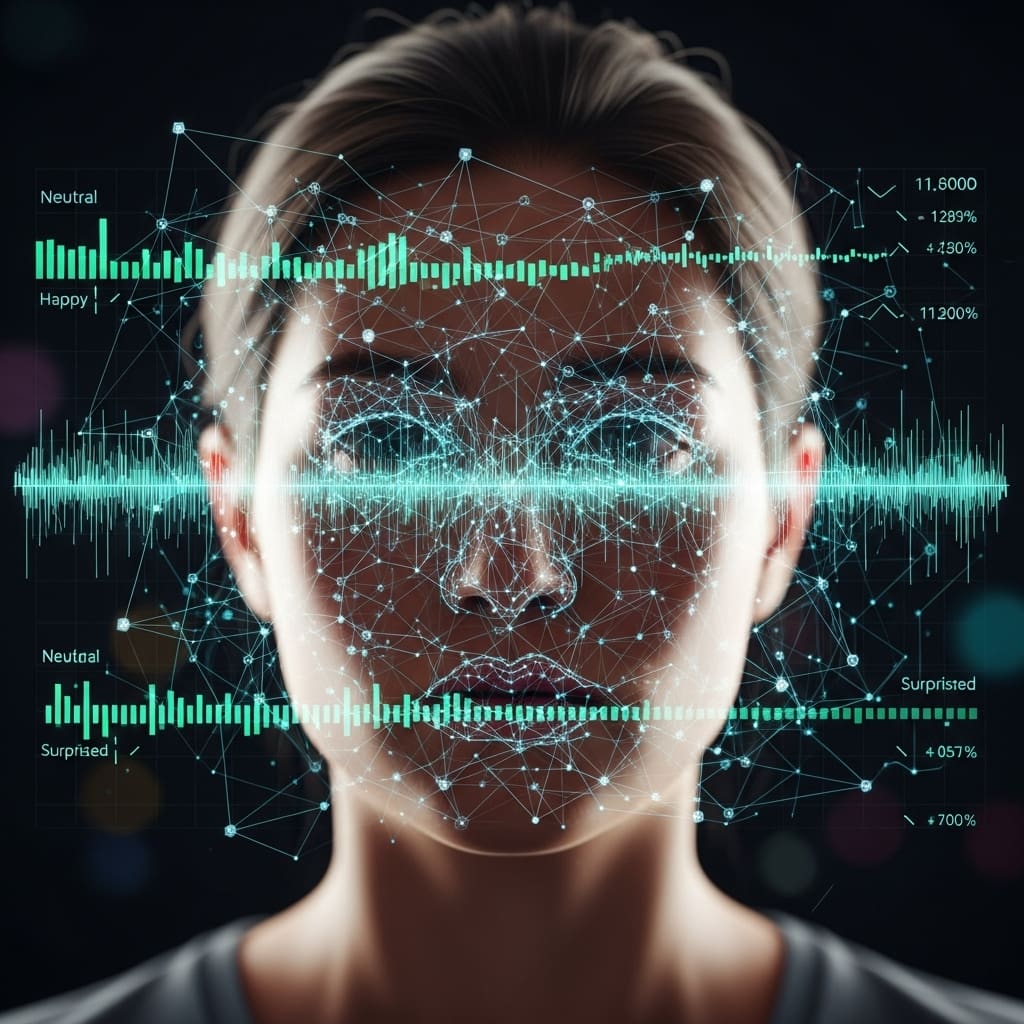
AI and emotions are no longer science-fiction; they’re starting to reshape how we understand our own minds. As algorithms learn to recognize patterns in faces, voices, and language, they quietly reveal blind spots in our own emotional self-awareness. For anyone curious about IQ, ADHD traits, personality types, or creativity, this shift invites a deeper question: how can technology become a mirror that helps us read our feelings, not just our scores?
From cognitive scores to emotional self-knowledge
For more than a century, we’ve been good at measuring certain types of intelligence. Classic IQ tests, for example, are typically normed so that the average IQ is 100 with a standard deviation of 15. That makes it easy to compare where someone’s cognitive performance falls relative to the general population.
Tools such as Raven’s Progressive Matrices, which ask you to detect patterns in abstract shapes and complete visual sequences, are widely used to assess abstract reasoning in educational and research settings. They’re quite good at capturing fluid intelligence—your ability to spot patterns and solve novel problems.
Yet many people walk out of a testing session thinking, “Okay, I know how I performed on logic and patterns, but why do I still struggle with motivation, burnout, or relationships?” That gap is exactly where emotional intelligence (EQ) becomes important—and where emerging technologies are starting to offer something new.
Instead of just asking, “How smart am I?”, more learners and professionals are now wondering, “How well do I understand my reactions, stress levels, and social cues—and how could I practice those skills the same way I practice math or verbal reasoning?”
A short story: Emma and the mirror in her pocket
Consider Emma, a 24-year-old graduate student preparing for competitive aptitude exams. She’s always tested well. On a practice IQ assessment that uses Raven-style items, her scores are comfortably above average. Friends come to her for help with logic puzzles and research design.
But Emma feels like she’s constantly on the edge of burnout. She wonders whether she might have ADHD because her focus swings between hyper-concentration and complete mental fog. She takes online ADHD checklists, MBTI-style personality tests, and creativity quizzes, but the results feel scattered. Some days she thinks, “Maybe I’m gifted,” and on other days, “Maybe I’m simply not built for this level of pressure.”
One evening, exhausted after a study session, she downloads an app that promises to track mood and attention patterns using machine learning. It analyzes her typed journal entries, sleep logs, and short voice notes, and then visualizes her emotional trends across the week.
Within a month, Emma notices a pattern she had never seen before:
- Her irritability spikes on days when she stacks back-to-back online tests without breaks.
- Her focus crashes whenever she skips lunch, even if she doesn’t feel physically hungry.
- Her creativity scores on divergent thinking tasks rise after social time, not after silent study marathons as she had assumed.
The app doesn’t diagnose ADHD—that’s something only a qualified clinician can do—but it does help Emma put language and structure around her internal experience. She begins to see her emotional responses and attention swings not as random failures, but as data-rich signals she can learn from.
Over time, Emma uses those insights to redesign her study routine: shorter, more focused sessions; protected social breaks; and a more realistic test-prep schedule that respects her emotional limits. Her IQ hasn’t changed, but the way she manages her own mind has transformed.
What the numbers reveal about emotions and digital tools
Stories like Emma’s are becoming more common as learning platforms, coaching apps, and mental fitness tools quietly collect large datasets on how we think and feel. While the science is still developing, several data-driven themes are already clear.
1. Cognitive performance is only part of the picture
In educational and workplace studies, individuals with similar IQ scores often show dramatically different outcomes in leadership, collaboration, and long-term achievement. The missing ingredient is frequently emotional intelligence: skills like self-awareness, impulse control, empathy, and the ability to recover from setbacks.
Digital platforms that combine cognitive tasks with self-report questionnaires and behavioral data (such as response times or task-switching patterns) are beginning to map this wider landscape. For example, some aptitude platforms now integrate mood check-ins and stress ratings alongside reasoning tasks, helping users correlate their emotional state with their performance on matrices, verbal analogies, or spatial tests.
2. Practice effects and emotional patterns go hand in hand
Psychologists have long known that you can improve scores on many cognitive tests simply through familiarity. This is called a practice effect: the more you see a particular type of question—like pattern-completion items in Raven’s Progressive Matrices—the more comfortable and efficient you become, even if your underlying ability hasn’t fundamentally changed.
AI-enhanced assessment platforms can track not only how scores improve with practice, but also how your emotional responses change. For instance, someone anxious about testing might show very high stress markers and erratic performance early on. As they repeat similar tasks, both their accuracy and their emotional stability can improve. The technology allows researchers and users to see that reduced anxiety and increased confidence may be as important as raw gains in speed or accuracy.
3. Attention, ADHD traits, and emotional regulation
Many adults exploring possible ADHD or attention differences start with online questionnaires and timed tasks. While these tools cannot diagnose, their aggregated data gives clues about how attention and emotion interact.
AI models can detect patterns such as:
- Frequent rapid switching between tasks in test interfaces, often paired with self-reported restlessness.
- Strong variability—“boom and bust” performance—across very similar tasks completed at different times of day.
- Higher rates of impulsive responding during periods of reported boredom or frustration.
When these behavioral markers are combined with mood ratings, sleep data, or even wearable sensor information (like heart-rate variability), people gain a more nuanced picture of how their emotional regulation supports or undermines their attention skills. That’s invaluable context for conversations with educators, coaches, or healthcare professionals.
4. Personality, creativity, and emotional tone
Personality and creativity assessments have also moved far beyond static questionnaires. Text-based AI systems can analyze language used in reflective journaling, brainstorming prompts, or open-ended responses to estimate traits such as openness, conscientiousness, or emotional stability. They can also detect shifts in emotional tone across time—subtle movements from pessimistic framing toward more balanced or optimistic language.
When we talk about AI and emotions in these contexts, the most promising applications are not about machines “feeling” anything, but about machines helping humans notice patterns we normally overlook. A person preparing for an English proficiency exam, for instance, might discover that their writing becomes more rigid and less expressive under time pressure. Recognizing that shift can spark targeted practice: not just on grammar and vocabulary, but on regulating anxiety so that expressive language skills can actually show up on test day.
Practical ways to use AI to strengthen your emotional intelligence
Tools alone won’t make anyone more emotionally intelligent—but used thoughtfully, they can act like a coach or mirror. Here are concrete ways to integrate technology into your self-development around IQ, ADHD traits, MBTI-style personality insights, and creativity.
1. Pair every test with a mini emotional debrief
Whenever you complete an IQ test, aptitude quiz, MBTI-like assessment, or creativity task, take 2–3 minutes to log your emotional state. Many apps will prompt you to do this, but you can also track it in a basic notes app. Consider questions like:
- How did I feel before I started—calm, rushed, excited, anxious?
- Where did my emotions spike—during time pressure, unfamiliar item types, or feedback screens?
- How did my feelings change when I saw my score?
Over time, AI-based journaling tools can help categorize and visualize these patterns, showing which conditions consistently bring out your best performance and which tend to derail you.
2. Use mood-aware study planning
Some learning platforms now use simple machine learning models to recommend when and how you should study. If you give them access to your focus ratings, energy levels, or mood logs, they can begin to suggest:
- The best times of day for heavy reasoning tasks like matrices or logic problems.
- When to insert breaks to prevent emotional overload and frustration.
- Which tasks to avoid on days when you flag low motivation or high stress.
This doesn’t replace self-knowledge; it amplifies it. You’re delegating pattern recognition to algorithms while retaining final control over your schedule.
3. Train emotional vocabulary with language tools
Emotional intelligence partly depends on having precise words for your internal states. If you only have labels like “stressed” or “fine,” it’s hard to act on what you feel. Language-learning and writing-improvement tools can be repurposed to grow your emotional vocabulary in English:
- Ask an AI writing coach to suggest nuanced alternatives to vague words like “upset” or “tired.”
- Rewrite diary entries using richer emotional language, then compare versions.
- Practice recognizing emotional tone in reading passages—use tools that highlight phrases signaling anxiety, confidence, or curiosity.
For learners preparing for English exams, this double-duty practice improves both expressive range and emotional clarity.
4. Simulate social scenarios safely
Conversational agents can act as low-stakes partners for rehearsing difficult interactions: giving feedback, asking for an extension, or discussing group-work conflicts. While they’re not a substitute for real relationships, they do let you:
- Experiment with different communication styles and observe the impact on the conversation.
- Practice pausing, rephrasing, and clarifying under mild emotional pressure.
- Reflect on your triggers when the dialogue doesn’t go as you hoped.
Used intentionally, this is like a flight simulator for social skills—particularly helpful for people who feel socially anxious, are exploring possible ADHD-related impulsivity, or are simply trying to refine leadership communication.
5. Reflect before you click “Start the test now”
Online assessments are everywhere, and it’s tempting to rush into the next IQ quiz, ADHD checklist, or personality inventory. Before you press that figurative button—Start the test now—pause to clarify your purpose:
- What do I hope to learn about myself beyond a number or four-letter type code?
- How will I respond if the result is lower, higher, or different than expected?
- Which trusted person (friend, mentor, professional) could help me interpret and apply the insights?
Aligning your emotional expectations with the testing experience turns each assessment into a learning moment instead of a pass/fail verdict.
Braiding head and heart in an intelligent age
The most exciting frontier is not machines that mimic feelings, but systems that help humans connect thoughts, traits, and emotions into a coherent picture. When used with consent, privacy safeguards, and a critical mindset, these tools can reveal how your reasoning strengths, attention patterns, personality style, and emotional habits interact across time.
The most powerful use of AI and emotions may be as a feedback loop that helps you notice, name, and navigate what you’re already experiencing. Numbers from IQ tests, insights from ADHD or personality questionnaires, and creativity scores all become more meaningful when you can see how they fluctuate with sleep, stress, relationships, and mindset.
Ultimately, emotional intelligence is a lifelong practice, not a one-time result. Technology can accelerate your learning curve—but only if you stay curious, reflective, and in charge of how your data is used. Think of these tools as sophisticated lenses, not as judges of your worth. The clearer the lens, and the more skillfully you use it, the more fully your cognitive and emotional capacities can come into focus.
Frequently asked questions
Can technology actually increase my IQ, or just my test scores?
Digital practice tools can improve your performance on specific tasks through familiarity and strategy—this is where practice effects come in. For example, repeatedly working with matrix-style puzzles can raise your scores on similar items. Whether this reflects a fundamental shift in underlying IQ is debated. What’s clear is that pairing cognitive practice with emotional skills (like managing anxiety and sustaining focus) tends to yield more robust, real-world benefits than targeting scores alone.
How can AI tools support someone who suspects they have ADHD?
AI-based apps can help people track attention patterns, energy levels, and emotional swings over days or weeks, creating a richer picture to bring to a qualified professional. Timers, focus modes, and adaptive study planners can also reduce overwhelm and support executive functioning. However, these tools cannot diagnose ADHD and should not replace clinical evaluation. Instead, think of them as data-gathering and skill-building aids that complement evidence-based medical and psychological care.
Are AI-driven personality and emotional assessments scientifically reliable?
Reliability and validity vary widely. Some research-grade systems are carefully validated, while many consumer apps are still experimental or entertainment-focused. AI can detect subtle language and behavior patterns, but interpreting them accurately is complex. When using these tools, check whether the developers provide technical documentation, peer-reviewed research, or clear caveats. Use results as hypotheses about yourself, not as absolute truths, and look for patterns that resonate across multiple sources and over time.
Related resources
AI and emotions: improve your results by practicing and tracking progress.